$120.00

 from
$84.00 USD
$145.00 USD
from
$84.00 USD
$145.00 USD


 Sold Out


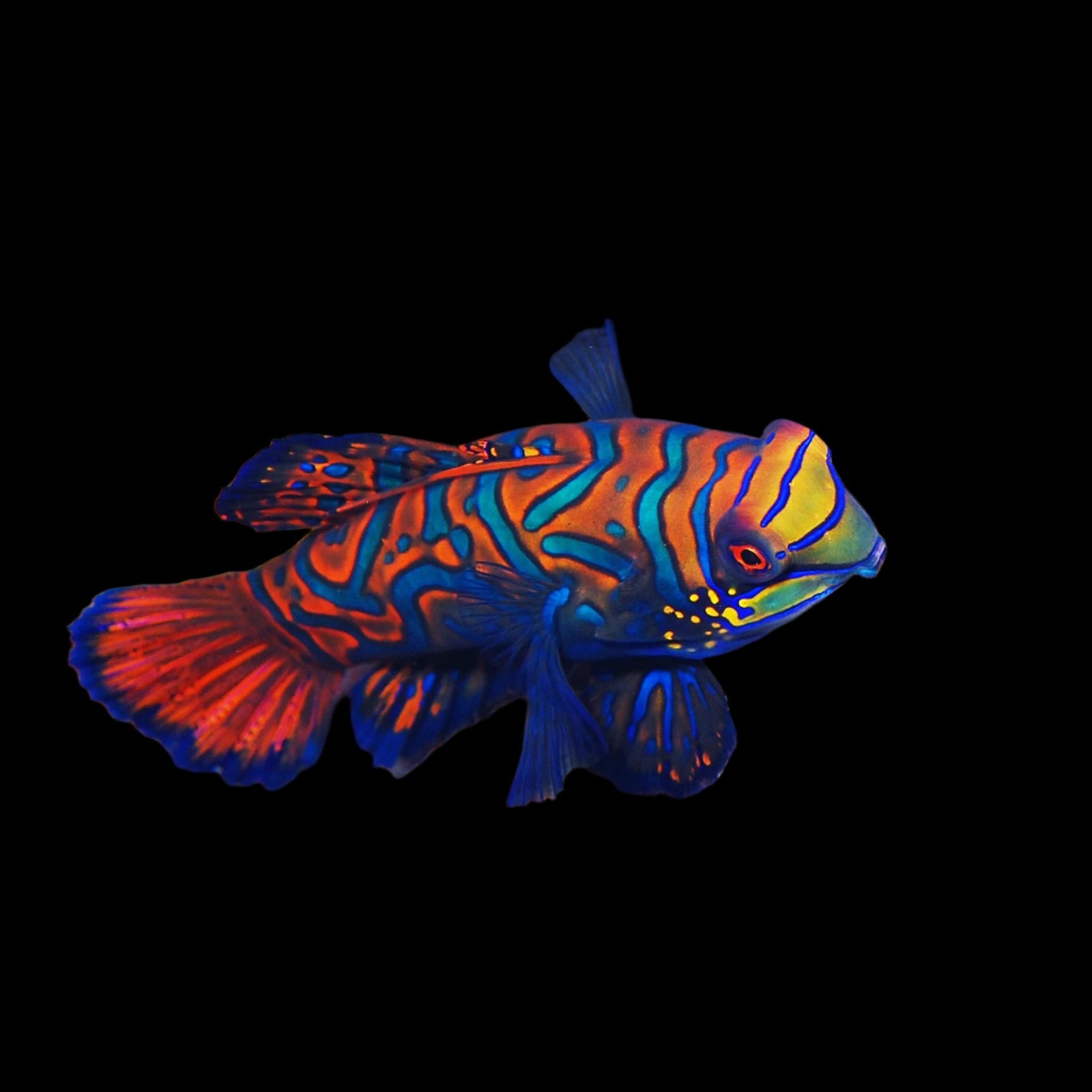
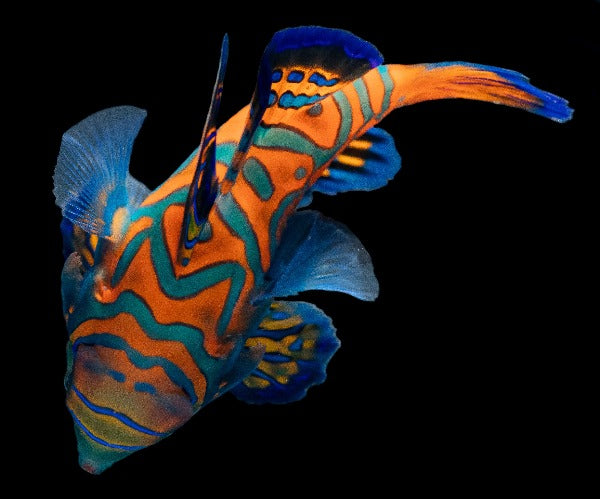
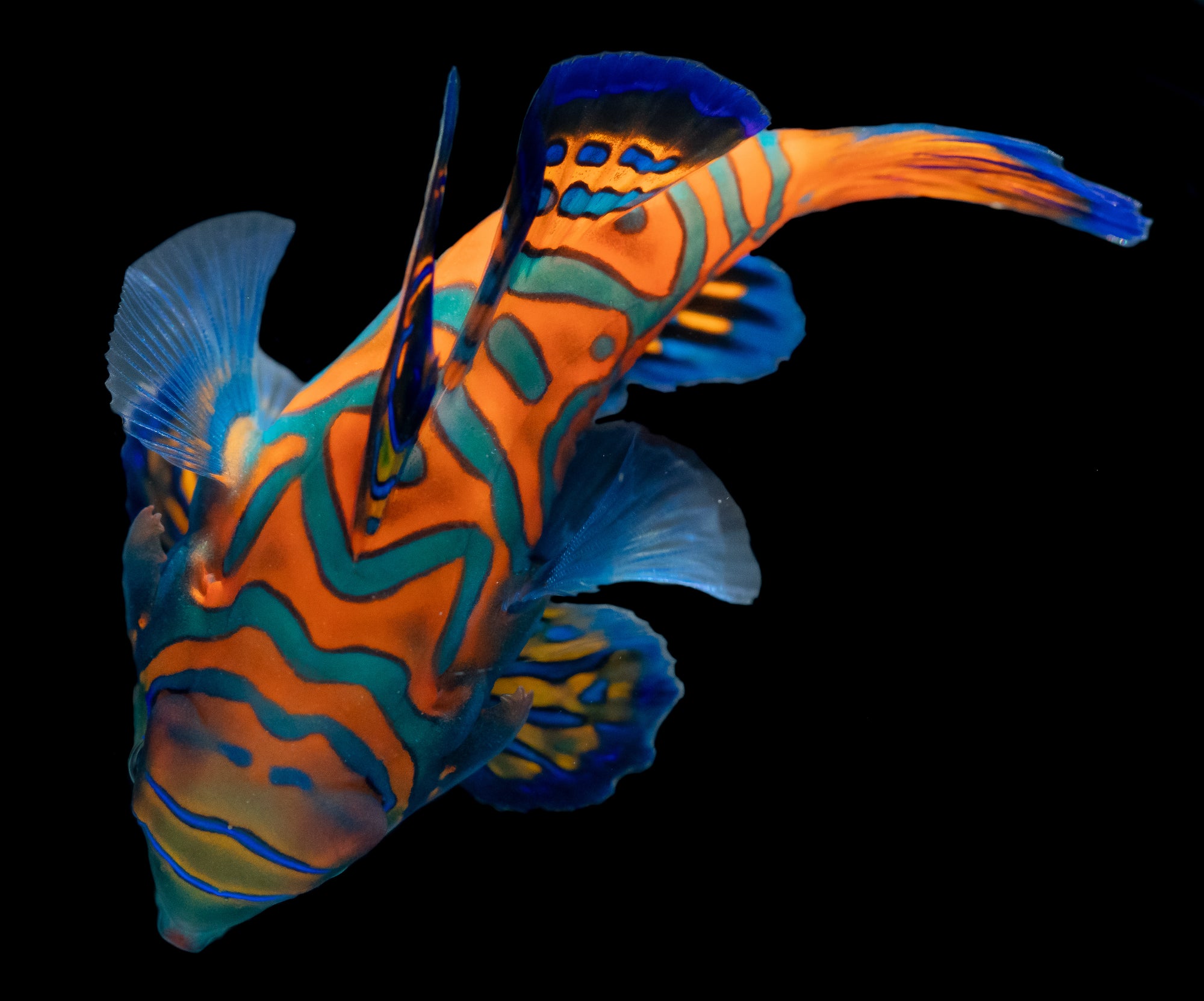
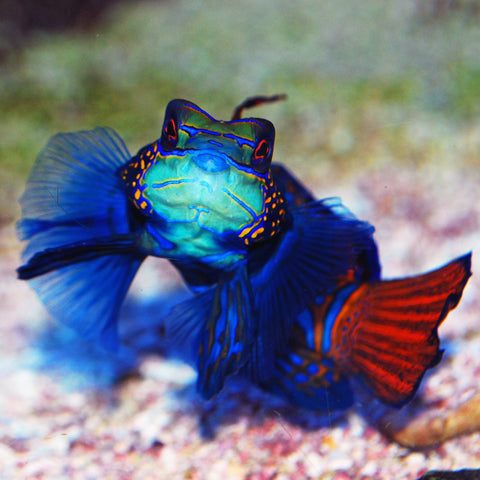
Mandarin fish have always been considered to be a difficult to keep species; not only because of the type of food they eat - live food - but because of HOW they eat it. With the introduction of captive bred mandarins that eat easy-to-use prepared foods to the aquarium hobby, this knocks down the difficulty level considerably, but it also helps to have species-specific knowledge to prepare for a new pet mandarin.
Like seahorses, mandarin fish are slow, methodical eaters. Instead of chasing food like other fish do, they tend to graze constantly all day on the substrate and rockwork. If this is your first mandarin, you might think something is wrong because they don't seem to be eating as greedily as your other fish do. The mandarin might take several seconds to scrutinize a single piece of food, only to decide it isn't "quite right" and move on to the next one. Most fish gorge on food when it's available, but mandarin fish eat comparatively tiny amounts of food at each feeding. These are totally normal, natural behaviors for this species.

Tips For Feeding Captive Bred Mandarin Fish:
1. In our facilities, we turn the pumps to "feed mode" then spot feed the mandarins to be sure that the food lands near them and covers the area where they're naturally grazing the rocks and substrate. Mandarins tend to eat food off substrates rather than out of the water column. If the food is floating on the water surface, they won't notice it or eat it.
2. Food type is less important to our captive bred mandarins than food size. This species has a particularly tiny mouth in proportion to its body size. Some of their favorite foods are DKI Marine 0.6mm pellets, TDO B2 or PE hatchery diet pellets, frozen Hikari baby brine shrimp, and Easy Reefs Masstick. (To feed Masstick, stick it to a frag disc and sink it to their favorite grazing area.) On arrival, they tend to prefer these favorite foods. Over time, a mandarin can learn to accept almost any meaty food that they can fit in their mouths, and customers report that they even eat flake foods.
3. If your other fish are more boisterous eaters and getting all the mandarin food before they can eat, you can find instructions online for DIY mandarin diners. Naturally, it will take time for the mandarin to feel safe in the diner and to learn how to use it.
4. In the wild, mandarins eat constantly all day long. Like seahorses, they lack a true stomach and have a fast metabolism. Mandarins need to eat at least 3 - 5x a day in an aquarium, and newly arrived or young mandarins should be fed most often so they can gain weight after fasting during transit. Many customers employ an automatic feeder that will dispense pellets while they're at work for supplemental feedings. The mandarins will learn where and when food is automatically dispensed over time. Be sure to position the feeder so it drops pellets in an area where the water's surface tension is being broken and the pellets can sink. Floating pellets don't do a mandarin any good.
5. Our captive bred mandarin fish do not require live foods like copepods, but they certainly like to eat them. If your tank has an abundance of live foods, you may notice that your mandarin will prefer the irresistible copepods until most have been consumed. It's still important to continue offering the prepared foods in the meantime to ensure they stay familiar with these foods and to supplement the copepods.
When Your New Pet Mandarin Arrives
Upon arrival, it's not unusual for your mandarin to be sluggish right out of the shipping box. You'll notice they go into a sleep-like state at night, as well, and it can take time for them to fully wake up each morning. We recommend putting them into an acclimation box with a small hide on arrival so they don't get swept away, lost, or bullied by the other fish. [The acclimation box must be designed for small fish like guppies; some reef style boxes have holes large enough for small fish to escape.]
Let your mandarin rest on the first day when they arrive by keeping the tank lights off, then feed them for the first time the next morning. It's a good idea to receive your mandarin when you know you'll be home the next day so you can spot feed your new fish throughout the day.
You can let them out of the acclimation box once they're eating well and active. If your tank is on the larger side, your mandarin might "disappear" for a while until they find a comfortable territory. We have had customers with very large tanks report that they don't notice them again until weeks or even months later in some cases when the mandarin is much bigger.
If your mandarin isn't eating by the 2nd morning, please reach out to us right away. These fish are bred in captivity and raised on prepared foods. It isn't normal for them to go off their regular feeds, and appetite loss is a clear indication of stress.
Some common potential stressors are - boisterous tank mates, lack of hiding places, and water parameters which are different from what the mandarin is used to. We house and ship our mandarins in water parameters closest to natural seawater, so parameters that are different can shock the fish, even if they're still considered to be "in range." When testing your parameters, pay close attention to ammonia and pH, since low pH or trace amounts of ammonia are well-known to cause appetite loss. Parameters that change rapidly, especially at night, can also cause stress. Be sure to check your parameters early in the morning before your aquarium lights come on so you can make sure they are stable. Of course, we're happy to help troubleshoot if you reach out to us.
Is My Mandarin Losing Weight?
Since mandarins have such a fast metabolism, they may lose a little bit of weight while fasting during shipping. That's why it's so important to make sure they are eating soon after arrival.
If you've had your mandarin for a while and are wondering if you're feeding it often enough, check the dorsal region behind the eyes. It should be rounded, not sunken in. If you notice sharp features in the dorsal region or the body, your mandarin isn't getting enough feedings. The body should be rounded and full.
This wild caught male mandarin pictured below had poor body condition and hadn't been getting regular feedings for an extended period of time.


If your mandarin has lost a significant amount of weight, consider it a health emergency. Since the most common cause of appetite loss is an environmental stressor, try to find and resolve that issue as quickly as possible. If the mandarin stops eating the foods it was raised on or was previously eating, that's a clear sign of an environmental stressor. Once you resolve the issue causing stress, you'll need to feed small amounts of food more frequently, at least 5x a day until the fish gains weight. If the fish doesn't have a good appetite, it is important to offer small amounts of a wide variety of foods as often as possible.
Biota captive bred Mandarin Fish eating pellets and flake food videos:
https://www.youtube.com/watch?v=iYgJMlteSQ8
https://www.youtube.com/shorts/JwTeYZPx2ko
https://www.youtube.com/shorts/bqHExSBuDXs
https://www.youtube.com/shorts/AppfuOo54dc
https://youtube.com/shorts/EoiHR2lIcvw?si=K3cFnc_1C1OE7JzL
https://www.youtube.com/watch?v=76t451R0gH8
https://www.youtube.com/watch?v=dBogUS8cGis
How to Introduce a New Fish to an Older Tankmate for Pairing
One of the most magical things you can witness in your reef aquarium is a bonded pair of fish. Whether it's a pair of mandarins gliding side by side or a duo of clownfish dancing in their favorite coral, paired fish are fascinating to observe and often display more natural behaviors. But how do you successfully introduce a new fish to an older tankmate in hopes of creating a pair? With patience, a plan, and the right tools, it can be easier than you think.

Why Pair Fish?
Some fish naturally live in pairs or harems in the wild. When kept alone, they may do just fine, but when paired, they often become more active, social, and even display breeding behavior.
Step 1: Choose the Right Match
Clownfish:
It may seem counterintuitive, but if you already have a Clownfish, you must introduce a smaller, younger Clownfish. Clownfish are protandrous hermaphrodites, meaning the dominant fish will become female, and the smaller will become male. Introducing two female Clownfish together will almost always end in tragedy. That's why it's important to choose the new Clownfish from a batch of clownfish that are most likely still juveniles. If you put two Clownfish together that have been single for a while, there’s a risk that both have already transitioned to female.

Mandarin Fish:
Mandarin Fish must be kept in male/female pairs. Though they are born either male or female and do not transition, it can be difficult to accurately sex them, so feel free to reach out to us with a photo of your Mandarin with the dorsal fin fully erect.
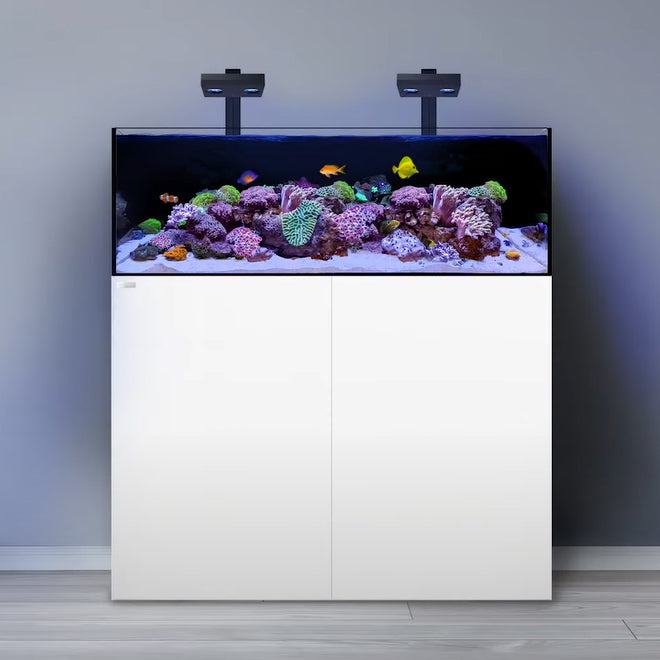
Our customers have successfully paired Mandarins of all sizes and ages using an acclimation box. On the rare occasions that pairs simply will not get along, a common element in these situations is a too-small tank size. It's imperative to only try pairing Mandarins in an aquarium of at least 30 gallons.
Angelfish:
Angelfish can be difficult to pair when the individuals aren't already familiar with one another. That's why purchasing two captive bred angelfish at the same from the same batch is ideal. This is much easier than trying to pair two wild-caught angelfish who are not familiar with each other, and their age/gender/maturity is unknown.
Angelfish are protogynous hermaphordites, meaning they start life as females, and the dominant individuals mature into males. If you already have an older Angelfish, and you want to introduce another, you must choose an Angelfish that has not yet transitioned to a male. 
Step 2: Use an Acclimation Box
This is the most important tool in your pairing setup. An acclimation box is a clear, ventilated container that hangs inside your aquarium, allowing the new fish to be visible to the older resident without risk of aggression. Both fish can see, smell, and interact with each other through the box for several days.
We recommend keeping the new fish in the acclimation box for ~7 days, depending on how the older fish reacts. Watch closely for signs of interest vs. hostility. You want curious behavior like hovering near the box or dancing movements, not flaring, nipping, or charging.
Make sure the acclimation box is large enough to comfortably house the fish and has hiding places inside like small PVC pipes or rocks. Also consider the size of your fish and ensure the ventilation holes are not large enough for your fish to escape. Biota's custom PNW boxes are designed for some of our smaller fish like Mandarins.
Step 3: Watch Their Body Language
Mandarins are especially expressive. If you’re pairing a male and female, you may notice them hunting together along the sides of the box or displaying gentle body movements. Clownfish may hover near the box or try to "host" near it. These are all good signs.
Step 4: Release at the Right Time
Once the fish are comfortable and showing peaceful interest in each other, release the new fish into the tank during a low-stress time, ideally at dusk with the lights dimmed or off. This helps reduce aggression and gives the new fish time to settle in before a new day.
Step 5: Keep Observing
After the release, continue to monitor the fish closely. Some chasing or posturing is normal as they establish their roles, but anything too aggressive or relentless should be taken seriously. In that case, it’s okay to separate them with the acclimation box and try again in a few days.
If you're noticing a lot of aggression on the first introduction, it is ideal to sequester the aggressor and allow the new fish to explore and gain territory if possible. With highly territorial species like some clownfish, you may need to repeat this process several times.
Mandarin Success Stories
We've heard from countless Biota customers who successfully paired our captive bred mandarin fish with their existing mandarin fish over the years. Using the acclimation box method, many hobbyists have created peaceful, bonded pairs, even in tanks with established, older fish.

When paired successfully, mandarins often travel the tank together, hunting copepods and exploring their territory. In the evenings, they perform an elegant courtship dance, rising slowly together into the water column.
A Few Extra Tips:
Make sure your tank is large enough, has plenty of hiding spaces, and has a lot of rockwork
Feed both fish well before and after pairing to reduce food-scarcity stress
With a little effort and observation, pairing fish can be a beautiful and rewarding part of the reefkeeping experience.
Have questions about pairing fish or choosing the right match? Reach out to us, we're happy to help you find your fish's perfect partner.
Are you considering adding a group of tangs or another territorial shoaling species? We have a blog just for you: https://shop.thebiotagroup.com/blogs/news/how-to-mix-multiple-tangs-in-an-aquarium
Mandarin photos courtesy of Christina Barringer of finatic_reef on Instagram